
- Why the balance grows
- The order to get out
- 1. Stop using the cards
- 2. List everything
- 3. Pay minimums everywhere, extra on the costliest
- 4. Replace the debt with cheaper debt
- 5. Build a small cash buffer
- Freeing up money to repay
- Dealing with recovery calls
- Settlement and its cost
- Staying out
- Frequently asked questions
- Should I close cards after paying them off?
- Does converting to EMI hurt my credit score?
- Is a personal loan to clear cards a good idea?
- Can I negotiate the interest rate?
- What if I cannot pay even the minimum?
- Will card debt affect a future home loan?
- In short
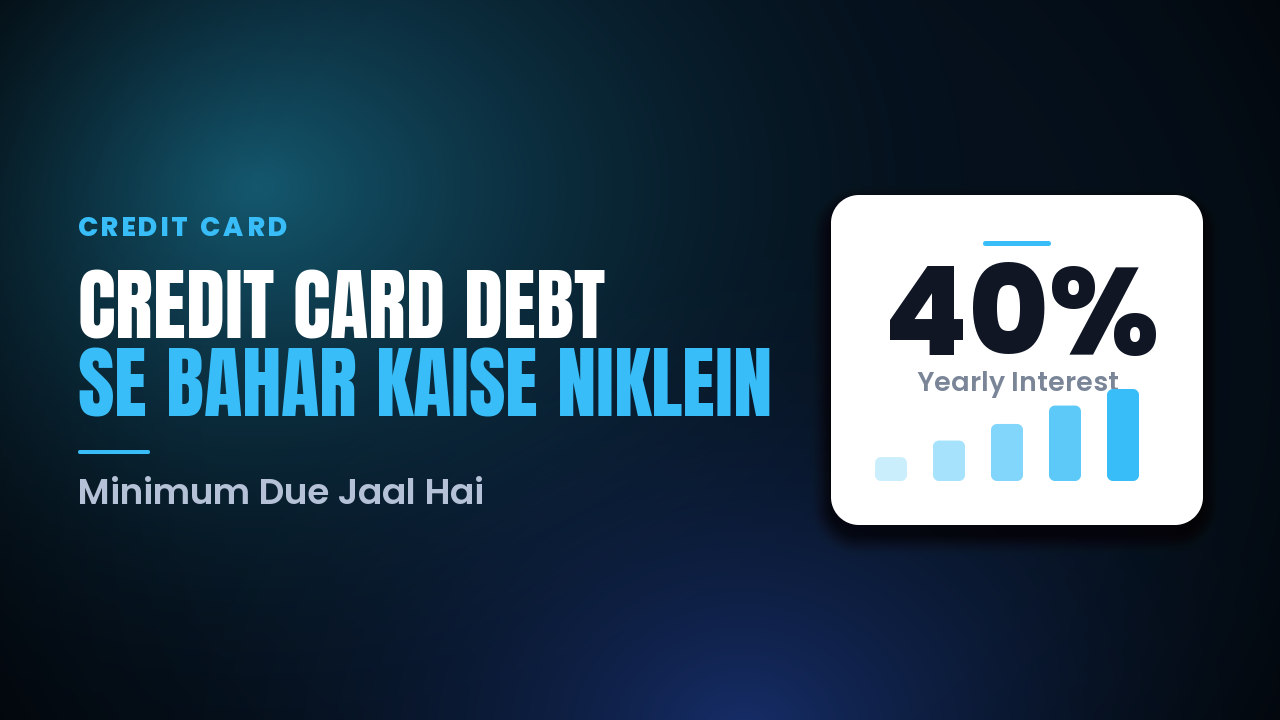
Credit card interest in India commonly runs at around 3 to 4 per cent per month — roughly 40 per cent a year, plus GST on the interest. Very little that a household can earn grows at that rate, which is why card debt, once it starts compounding, outpaces almost any attempt to repay it gradually.
The way out is mechanical rather than clever. It requires stopping the bleeding first, then systematically replacing expensive debt with cheaper debt.
Why the balance grows

Three mechanisms do most of the damage, and the second surprises people.
The minimum due. Paying it keeps your account current and your credit report clean, and it barely reduces the principal — most of it is interest and charges. A balance paid at the minimum each month can take many years to clear and cost more in interest than the original purchase.
The lost interest-free period. This is the one most people do not know. Once you carry a balance, the grace period on new purchases disappears. Every fresh swipe starts accruing interest from the transaction date. So a card with an unpaid balance turns all your ordinary spending into high-interest borrowing.
Cash advances. A withdrawal fee plus interest from day one, no grace period, and no rewards. Treat the ATM function on a credit card as if it did not exist.
The order to get out

1. Stop using the cards
Not cancel — stop using. Remove them from your wallet and from saved payment details on shopping apps and subscriptions. Switch to UPI or a debit card for daily spending.
This matters because of the lost grace period: while a balance is outstanding, every new purchase is immediately expensive.
2. List everything
One sheet with every card, its outstanding balance, its interest rate, and its minimum due. People in card debt usually avoid looking at the total, and the total is what makes the plan possible.
3. Pay minimums everywhere, extra on the costliest
Paying minimums on all cards protects your credit report. Every rupee beyond that goes to the card with the highest interest rate, not the largest balance.
Highest-rate-first saves the most money. If you need the psychological lift of closing one account quickly, smallest-balance-first works too — it costs a little more and keeps more people going. Either beats spreading extra payments evenly.
4. Replace the debt with cheaper debt
This is the main move, and the one people resist because it feels like borrowing more. It is not more borrowing; it is the same borrowing at a third of the cost.
- Convert the outstanding to EMI with the card issuer. Rates are typically well below the revolving rate, and the balance becomes a fixed, shrinking obligation. Ask for the reducing-balance rate and the processing fee in writing.
- A gold loan, if you have gold. Secured, quick, and often a fraction of card interest.
- A top-up on an existing home loan, which is usually the cheapest money available to a borrower who has one.
- A personal loan for consolidation — more expensive than secured options, still far cheaper than cards, and it converts several payments into one.
- A balance transfer to another card at a promotional rate. Useful only if you will clear it within the promotional window; after that, the rate reverts and you are back where you started.
- A loan against FD or securities, if you have them. Cheaper than breaking a deposit in many cases.
One caution: do not borrow from friends or family without a written understanding, and never take an informal high-interest loan to pay a card. People do, and it ends worse.
5. Build a small cash buffer
Even while repaying, put aside one month of essential expenses. Without it, the next unexpected bill goes straight back onto a card and the cycle restarts. This is why “pay everything at the debt” plans frequently fail.
Freeing up money to repay
Nothing here is comfortable, and all of it works:
- Cancel subscriptions and auto-debits you do not use. Check the card statement line by line — most people find several.
- Pause investments temporarily. An SIP earning an uncertain return while a card charges 40 per cent certain is a losing trade. Keep insurance premiums going; pause the rest.
- Do not break a PPF or EPF balance unless the alternative is default. Those have long-term value and withdrawal consequences; prefer a loan against them where available.
- Sell what you are not using. An unused phone, a second vehicle, gold you were never going to wear.
- Negotiate with the issuer. Ask for a waiver of late fees, a reduction in the interest rate, or a structured repayment. Issuers do agree, particularly for customers with a long history, and particularly when the alternative is a default.
Dealing with recovery calls
If you have fallen behind, know what is and is not permitted. The RBI’s rules on outsourcing of financial services and recovery agents place clear limits on lenders and their agents:
- Recovery calls are restricted to reasonable hours, generally between 8am and 7pm.
- Agents may not use threats, abuse, intimidation or public humiliation, and may not contact your relatives, employer or neighbours to shame you.
- They may not visit at odd hours or behave in a manner amounting to harassment.
- You are entitled to deal with the lender rather than only the agent, and to a written account of what is owed.
If the line is crossed: record the calls where lawful, write a formal complaint to the bank’s grievance redressal officer, and escalate to the RBI’s integrated ombudsman scheme if unresolved. Harassment is also a matter you can take to the police.
And speak to the lender early. A borrower who calls before defaulting has options — restructuring, a settlement, a revised schedule. A borrower who stops answering the phone has none.
Settlement and its cost
If the debt is genuinely unpayable, issuers sometimes accept a one-time settlement for less than the full amount. Understand the consequence: the account is reported as “settled” rather than “closed” on your credit report, which is a serious negative marker that lenders see for years.
A settlement is a last resort, not a strategy. Clearing the full amount, even slowly, leaves your credit record intact.
Staying out
- Autopay the full statement balance, never the minimum.
- Keep utilisation under about 30 per cent of the limit — it protects your credit score even when you pay in full.
- Keep one card, not five. Multiple cards make the total invisible.
- Do not close your oldest card once you are clear; credit history length helps your score.
- Treat “no-cost EMI” sceptically. The cost is usually in the price or the forgone discount, and processing fees still apply.
- Build the emergency fund to six months. Card debt is almost always an emergency that had nowhere else to go.
Frequently asked questions
Should I close cards after paying them off?
Keep the oldest one open and unused. Closing cards reduces your total limit and shortens your credit history, both of which can lower your score.
Does converting to EMI hurt my credit score?
No. It usually helps, because utilisation falls and the balance becomes a term loan being repaid on schedule.
Is a personal loan to clear cards a good idea?
Generally yes on cost, provided you stop using the cards afterwards. People who consolidate and keep spending end up with both debts.
Can I negotiate the interest rate?
Often, especially with a long account history or a competing offer. Call and ask; the worst outcome is no.
What if I cannot pay even the minimum?
Contact the issuer before the due date and ask for a restructuring or hardship arrangement. Silence leads to penal charges, a damaged report and recovery action.
Will card debt affect a future home loan?
Yes. Lenders look at your card utilisation, payment history and total obligations. Clearing card debt is one of the fastest ways to improve a loan application.
In short
Stop using the cards first — while a balance is outstanding there is no interest-free period, so every new purchase is immediately expensive. Then list every balance and rate, pay minimums everywhere and everything extra on the highest-rate card.
Replace the debt with cheaper debt: convert to EMI, use a gold loan or a home loan top-up, or consolidate with a personal loan. Keep one month of expenses in cash so the next emergency does not return to the card, know the limits on recovery calls, and treat a settlement as a last resort because of what it does to your credit report.
यह भी पढ़िए: Credit Card Rewards in India: How to Actually Get Value Out of Them · How to Improve Your CIBIL Score in India: What Actually Moves It · Gold Loan in India: The Cheapest Emergency Money, and Its One Real Risk






