
- The ten thousand steps figure
- What matters more than the count
- Planning around Indian conditions
- Shoes, which are the only equipment
- Form, briefly
- Building it up, and making it stick
- Walking or running
- Frequently asked questions
- Do I need ten thousand steps a day?
- What matters more than the step count?
- Why walk after meals?
- Does air quality matter?
- What shoes should I wear?
- Is walking enough on its own?
- In short
Walking is the only exercise with no equipment, no skill requirement, no membership and almost no injury risk, which works at any age and any level of fitness. It also has one of the strongest evidence bases of anything in preventive health, for cardiovascular risk, blood sugar, mood, sleep and length of life.
And it has been saddled with a number that discourages the people it should encourage.
This is general information rather than medical advice. If you have chest pain, breathlessness at rest, known heart disease, uncontrolled blood pressure, or diabetes with foot complications, speak to a doctor before starting or increasing exercise.
The ten thousand steps figure
It did not come from research. It originated as a marketing figure attached to a Japanese pedometer in the 1960s, and it has been repeated ever since because it is a round number.
What the evidence actually suggests is more encouraging. Substantial benefit appears well below that target — meaningful reductions in risk begin at a few thousand steps a day, improve steadily through the middle ranges, and show diminishing additional returns beyond roughly eight to ten thousand. For older adults the curve flattens earlier still.
The practical conclusion for anyone currently walking three thousand steps a day: the goal is not ten thousand. It is more than you do now. Going from three thousand to six is a larger health gain than going from eight thousand to eleven, and it is achievable this week.
Treat the number as a direction rather than a pass mark, because people who cannot reach an arbitrary target tend to stop entirely.
What matters more than the count

A brisk portion. Intensity is where most of the cardiovascular benefit lives. Brisk means you can hold a conversation but not sing — breathing noticeably harder, a sense of purpose in the pace. Thirty minutes of that does more for the heart than two hours of strolling, and if you have limited time, raise the pace before you extend the duration.
Consistency. Most days beats one long weekend walk, for the same weekly total. The physiological responses to exercise are largely short-lived, so the regularity is doing work the volume does not.
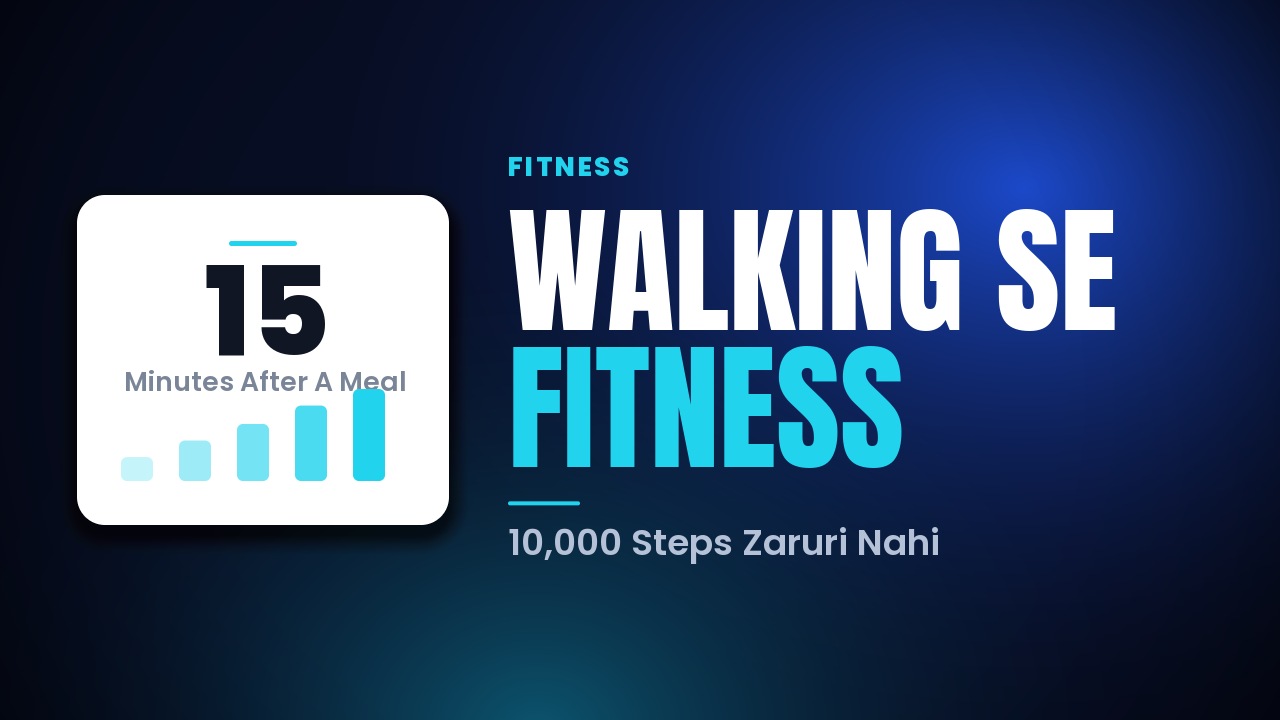
A walk after meals. This is the most useful habit in this article for an Indian household. Ten to fifteen minutes of easy walking after eating has a measurable effect on the blood sugar rise that follows a meal — which matters enormously in a country where so many people are managing diabetes or heading towards it. It requires no change to your routine beyond not sitting down immediately after dinner.
Breaking up sitting. Getting up and moving for a couple of minutes every half hour or hour carries benefits independent of your daily total. For anyone at a desk for eight hours, this is a separate thing to do, not a substitute for the walk.
Strength work, twice a week. Walking does not prevent the muscle and bone loss that comes with age, and it is honest to say so. Two short sessions a week — bodyweight squats, lunges, push-ups against a wall or the floor, a resistance band, or carrying something heavy — cover what walking cannot. Fifteen minutes each is enough to matter.
Planning around Indian conditions

Heat. Early morning or after sunset for most of the year in most of the country. Walking at midday in April or May is a genuine health risk rather than a test of commitment, and heat exhaustion arrives faster than people expect — dizziness, nausea, a headache, or sweating that stops are all reasons to stop immediately and get into shade.
Air quality. This deserves more attention than it gets. Walking briskly beside a busy road at peak traffic means breathing a great deal more of that air than you would at rest, and on a high-pollution day it offsets part of what the exercise is doing for you. Practical responses: walk in a park, a colony interior or a stadium track rather than along a main road; prefer early mornings, which are often cleaner; check the day’s air quality in the season when it matters; and on genuinely bad days reduce the intensity or move indoors — a shopping centre, a corridor, stairs at home or a treadmill.
Not walking at all is worse than walking in imperfect air. But choosing the route and the hour well is free, and it is most of the fix.
Monsoon. Have an indoor alternative decided in advance, because a week of rain is where routines die. Stairs, a corridor, a mall, a treadmill, or an indoor routine on a mat.
Safety. Well-lit routes, bright or reflective clothing after dark, a footpath where one exists and a careful choice where none does, awareness of stray dogs, and a phone with you. Choose routes and times deliberately, and walk with company where that makes the difference between going and not going.
Shoes, which are the only equipment
- Cushioned walking or running shoes. Not slippers, not flat canvas shoes, not formal shoes. Long distances in unsupportive footwear produce knee, shin and heel problems, and the fix costs less than the physiotherapy.
- Replace them when the midsole has compressed, not when the upper looks worn. The cushioning flattens long before the shoe looks finished — a rough guide is several hundred kilometres or something in the region of a year of regular walking, and if the shoe feels dead underfoot it is.
- Proper socks, which prevent most blisters, and attention to any hot spot before it becomes one.
- Go half a size up if feet swell on longer walks, and buy shoes in the evening when feet are larger.
If you have diabetes, footwear and foot care are not optional. Reduced sensation means a blister or a small cut can go unnoticed and become a serious problem. Inspect your feet every day, including between the toes and the soles, wear well-fitting cushioned shoes with seamless socks, never walk barefoot even indoors, and have any wound looked at promptly rather than waiting.
Form, briefly
- Upright posture, shoulders relaxed, looking ahead rather than down at a phone.
- A natural arm swing, bent at the elbow when walking briskly.
- Do not overstride. Faster walking comes from more steps rather than longer ones, and reaching out with the front foot is how shins get sore.
- Breathe normally. If you cannot speak a sentence, you are above brisk and can ease off.
- Carry water for anything over half an hour in heat, and add electrolytes for long walks.
Building it up, and making it stick
- Start from where you actually are. Measure a normal week on your phone first, then add about a tenth per week.
- Add intensity before duration. Five minutes brisk inside a twenty-minute walk, then ten, then fifteen.
- Attach it to an existing habit. After dinner, before the morning tea, walking to the shop instead of driving, one stop earlier off the bus. A walk that depends on motivation happens less often than one attached to something that already happens daily.
- Take phone calls walking. A thirty-minute call is a thirty-minute walk, and it costs nothing.
- Use the stairs as a deliberate part of the day rather than an occasional virtue.
- Walk with someone, which is the strongest predictor of still doing it in six months.
- Track it on your phone, which is sufficient. A dedicated device is a preference rather than a requirement.
- Watch better measures than steps — your resting heart rate over months, how you feel on three flights of stairs, your time over a fixed route. These tell you whether fitness is improving, which a step count does not.
Walking or running
Running is more time-efficient: it delivers a given amount of cardiovascular work in less time. It also carries a far higher injury rate, particularly for beginners, heavier people and anyone with knee history.
At a matched amount of total effort, walking delivers much of the same cardiovascular benefit with a fraction of the injury risk. So if you enjoy running, run; if you do not, or if your joints object, walking briskly for longer is a perfectly respectable answer and not a lesser one. The best exercise remains the one you will still be doing in two years.
Frequently asked questions
Do I need ten thousand steps a day?
No. That figure came from a 1960s pedometer marketing campaign rather than research. Benefit begins well below it and the additional gains flatten out around eight to ten thousand — so the target is more than you currently do, not a fixed number.
What matters more than the step count?
A brisk portion where you can talk but not sing, walking most days rather than once a week, a short walk after meals, standing up every half hour, and two short strength sessions a week to cover what walking does not.
Why walk after meals?
Because ten to fifteen minutes of easy walking after eating has a measurable effect on the blood sugar rise that follows a meal — which matters a great deal given how common diabetes and prediabetes are in India.
Does air quality matter?
Yes. Walking briskly beside a busy road at peak traffic means breathing much more of that air, which offsets part of the benefit. Prefer parks, colony interiors and early mornings, and reduce intensity or move indoors on genuinely bad days — though not walking at all is worse.
What shoes should I wear?
Cushioned walking or running shoes, never slippers or flat canvas, replaced when the midsole has compressed rather than when the upper looks worn. If you have diabetes, well-fitting cushioned shoes, seamless socks, never walking barefoot and a daily foot inspection are essential.
Is walking enough on its own?
For cardiovascular health, largely yes. For muscle and bone, no — walking does not prevent age-related loss, so add two fifteen-minute strength sessions a week.
In short
Ignore the ten thousand step target, which came from an advertisement. Benefit starts well below it, and going from three thousand steps to six matters more than going from eight to eleven — so the goal is simply more than you do now.
Then spend your attention on the things that matter more than the count: a brisk portion where conversation is possible but singing is not, walking most days rather than once a week, standing up every half hour if you sit for a living, and above all a ten to fifteen minute walk after meals, which acts directly on the blood sugar response that so much of India is managing. Add two short strength sessions a week, because walking does not protect muscle and bone.
Plan around the conditions: early morning or after sunset in summer, parks and colony roads rather than highways at peak traffic, reduced intensity on bad air days, an indoor plan for the monsoon, water and electrolytes in heat. Wear cushioned shoes and replace them when the sole feels dead — and if you have diabetes, inspect your feet daily and never walk barefoot. Attach the walk to something that already happens every day, take your calls on your feet, walk with someone, and judge progress by your resting heart rate and how three flights of stairs feel rather than by the number on the screen.
यह भी पढ़िए: Starting to Run in India: Heat, Shoes and Not Getting Injured · Starting at the Gym: A First Three Months That Actually Works · Starting Yoga: What Beginners Get Wrong and a Simple Daily Sequence






