
- When the insurer stops repairing
- What the declared value is, and why it disappoints
- How the settlement is computed
- A theft claim: the documents and the waiting
- After the settlement
- If the claim is delayed or short-settled
- Frequently asked questions
- When is a vehicle treated as a total loss?
- Why is the settlement so much less than I paid?
- How do I avoid that gap on a new car?
- What holds up a theft claim?
- Why does the insurer want both keys?
- What do people forget after settlement?
- In short
A car bought for twelve lakh twenty-two months ago is written off in an accident. The owner expects something close to what he paid, or at least enough to buy a similar car. The insurer settles at a figure well under nine lakh, and he is told it is correct.
It is correct. The policy insured a declared value that depreciates every year, and that value — not the purchase price and not the replacement cost — is what the contract pays. There was an add-on that would have closed most of the gap, available for a small premium at each renewal, and nobody had explained what it was for.
Policy terms, depreciation schedules, settlement thresholds and procedural requirements vary by insurer and change. Read your own policy schedule and confirm the position with your insurer.
When the insurer stops repairing
Ordinarily a claim is a repair. Two situations change that.
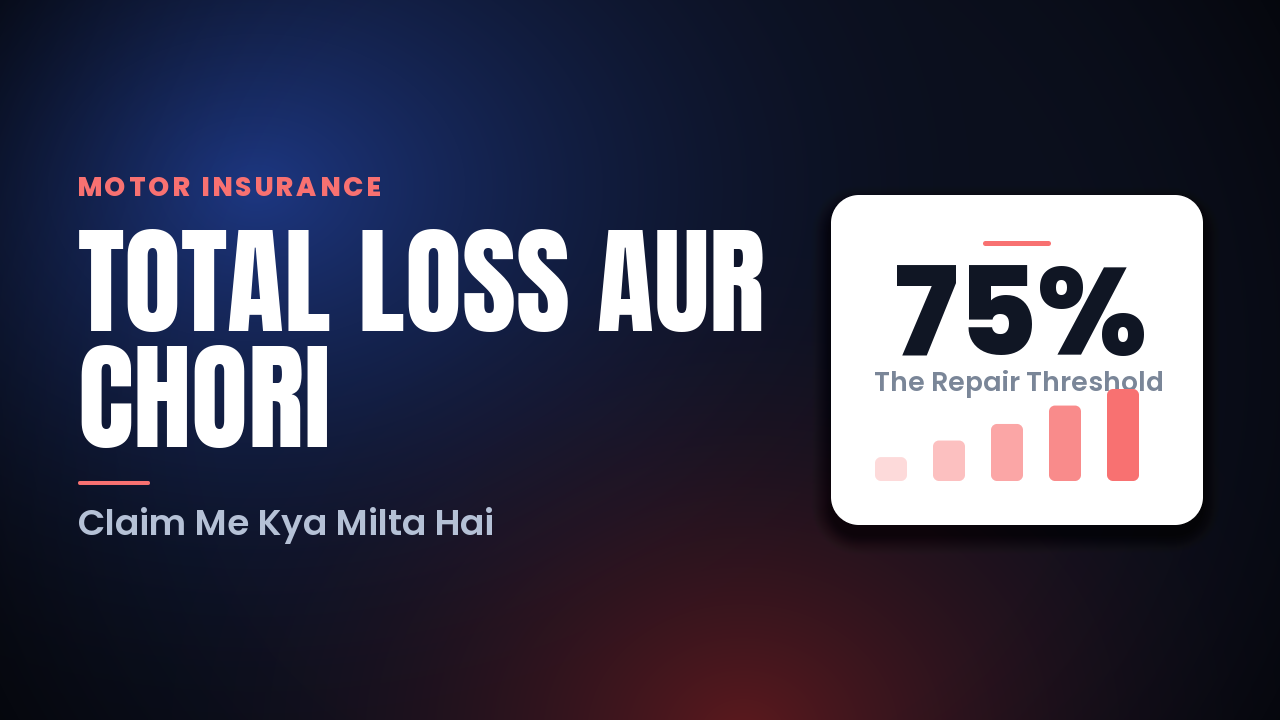
Total loss. The vehicle is damaged beyond economical repair. Insurers apply a threshold — commonly described as repair costs exceeding around seventy-five per cent of the declared value — above which the vehicle is treated as a constructive total loss and settled in cash rather than repaired. The exact threshold varies, so ask what your insurer applies.
This matters because a repair estimate near the threshold can go either way, and you may have a view. A settlement at declared value ends your ownership of a vehicle you might have preferred repaired, or saves you from a vehicle that will never be right again. Ask for the surveyor’s estimate and the basis of the decision in writing.
Theft. There is nothing to repair, so the claim is for the declared value.
What the declared value is, and why it disappoints
The sum insured for the vehicle itself is the insured declared value, computed from the manufacturer’s listed price less depreciation for the vehicle’s age, with its own schedule for parts. It is stated on your policy schedule, and it is set at every renewal.
Two consequences.
It falls steeply in the early years. A car’s declared value after two years is substantially below what you paid, which is exactly when a total loss hurts most — the loan is still running and the car still feels new.
Under-declaring it to save premium is a false economy. Some buyers accept a lower declared value because it reduces the premium a little. That lower figure is precisely what you receive on a total loss or theft, so the saving of a few hundred rupees costs tens of thousands in the one scenario the cover exists for. Check the declared value on every renewal and keep it realistic.
The add-on that closes the gap is return-to-invoice or invoice-protection cover, which pays the invoice value — in some versions including registration charges and road tax — rather than the depreciated declared value. It is inexpensive, it is only available on relatively new vehicles, and it is the single most valuable motor add-on precisely because total loss and theft are where the gap appears. If your car is new and financed, consider it strongly.
How the settlement is computed

- Start with the declared value in the schedule.
- Subtract the compulsory deductible, and any voluntary deductible you chose to reduce the premium.
- Decide about the salvage. On a total loss you can let the insurer take the wreck and receive the full amount, or keep the wreck and have its assessed value deducted. Unless you specifically want the vehicle or its parts, letting the insurer take it is simpler and usually better — disposing of a written-off vehicle yourself is its own problem.
- The lender is paid first if the vehicle is financed. The insurer settles the outstanding loan and any balance comes to you. If the loan exceeds the settlement, you still owe the difference, which is another argument for invoice protection on a financed new car.
- The no claim bonus is gone. Years of accumulated discount end with the claim, and your next policy starts without it.
If the offer is below the declared value in your schedule, ask for the computation in writing. The schedule is the contract, and an unexplained shortfall is worth contesting.
A theft claim: the documents and the waiting

Theft claims are not difficult, they are slow, and they are slow for one specific reason.
- File a police report immediately — the same day — and inform the insurer the same day. Delay in either is a standard ground for dispute.
- Then pursue the untraced certificate. The claim cannot be settled until the police issue a report or certificate stating the vehicle has not been traced, which typically comes after a period of investigation and can take months. This is the document the whole claim waits on, and it moves faster if you follow it up at the police station in person rather than waiting to be informed. Ask the insurer what exactly they need and get it in writing, then take that to the police.
- Produce every original key, including spares. Insurers ask for all of them. A missing key raises a question about how the vehicle was taken and about whether it was left accessible, and it is a common point of friction.
- Hand over the registration certificate and tax papers, and complete the transfer forms the insurer specifies so that ownership can pass to them on settlement. For a financed vehicle, the lender’s forms and its no objection certificate are needed too.
- Sign the subrogation and indemnity letters, which let the insurer pursue recovery of the vehicle and protect it if the vehicle later turns up.
- Keep copies of everything and submit against acknowledgement.
Why theft claims get rejected: keys left in the vehicle, the vehicle left unlocked, delayed intimation to the police or the insurer, no police report, the driver not holding a valid licence, or the vehicle being used for a purpose the policy did not cover — for instance a privately insured car being used commercially. Most of these are avoidable and none is arguable afterwards.
Note also that a theft of parts rather than the vehicle is an ordinary partial claim, not this process, and depreciation applies to the replaced parts unless you hold zero-depreciation cover.
After the settlement
The money arriving is not the end of it, and these steps are routinely forgotten.
- Complete the registration formalities. Transfer the registration to the insurer or its nominee where they have taken the vehicle or the salvage, or apply to cancel the registration as the case requires. An unresolved registration in your name for a vehicle you no longer have causes problems later, including challans and notices.
- Close the loan properly and collect the no objection certificate, the no-dues letter and the release of the hypothecation. Verify the loan shows as closed on your credit report a couple of months later.
- Cancel or transfer the electronic toll tag, and remove the vehicle from any parking, society or office registrations.
- Cancel any linked subscriptions — connected car services, roadside assistance bought separately.
- Keep the entire file — police report, untraced certificate, settlement letter, forms, correspondence — permanently.
- Expect to start the next policy without a no claim bonus, and budget for a higher premium on the replacement vehicle.
If the claim is delayed or short-settled
- Ask for the position in writing — what document is outstanding, or how the amount was computed.
- Check the declared value in your schedule against the offer, and ask for the basis of any difference.
- Use the insurer’s grievance redressal mechanism in writing, with dates and the chronology.
- Then the insurance ombudsman, which is free, decides claims up to a monetary limit and handles motor claim disputes routinely. There is also the regulator’s grievance portal.
- Know that settlement timelines are prescribed by the regulator once the documentation is complete, so a delay after you have submitted everything is a matter you can press rather than simply endure.
Frequently asked questions
When is a vehicle treated as a total loss?
When repair costs exceed a threshold of the declared value — commonly described as around seventy-five per cent — after which the insurer settles in cash rather than repairing. The exact threshold varies, so ask yours and request the surveyor’s estimate in writing.
Why is the settlement so much less than I paid?
Because the policy insures the declared value, computed from the listed price less depreciation for the vehicle’s age, not the purchase price or the replacement cost. The fall is steepest in the early years.
How do I avoid that gap on a new car?
Buy return-to-invoice or invoice-protection cover, which pays the invoice value rather than the depreciated declared value, and in some versions includes registration charges and road tax. It is inexpensive and only available on relatively new vehicles.
What holds up a theft claim?
The untraced certificate from the police, which follows a period of investigation and can take months. The claim cannot settle without it, so find out exactly what the insurer needs and follow it up at the police station yourself.
Why does the insurer want both keys?
Because a missing key raises a question about how the vehicle was taken and whether it was left accessible. Produce every original key including spares.
What do people forget after settlement?
Completing the registration transfer or cancellation, closing the loan and collecting the no objection certificate and hypothecation release, and cancelling the toll tag. An unresolved registration in your name later produces notices for a vehicle you no longer have.
In short
Past a repair threshold, and always on theft, the insurer pays the declared value in your policy schedule — less the deductibles, less the salvage if you keep it, with the lender paid first and your no claim bonus gone. That value depreciates steeply, so a two-year-old car settles well below what it cost. Check the declared value at every renewal, never under-declare it to save a few hundred rupees of premium, and on a new or financed vehicle buy the invoice-protection add-on, which is the one that closes the gap.
For a theft claim, report to the police and the insurer the same day, then chase the untraced certificate yourself, because that single document is what the settlement waits on and it can take months. Produce every original key, hand over the registration and tax papers with the transfer forms, sign the subrogation letters, and submit everything against acknowledgement. Claims fail on keys left in the vehicle, delayed intimation, an invalid licence or a private policy on a commercially used car — none of which can be argued afterwards.
Afterwards, finish the job: complete the registration transfer or cancellation, close the loan and collect the release of hypothecation, cancel the toll tag, and keep the whole file permanently. And if the offer falls short of the schedule or the delay persists after you have submitted everything, ask for the computation in writing and escalate to the free insurance ombudsman.
यह भी पढ़िए: IDV in Car Insurance: The Number That Decides Your Claim · Filing a Motor Insurance Claim in India: Step by Step · Car Insurance Add-Ons: Which Ones Are Worth Paying For






