
- What the premium is made of
- The no claim bonus, which is the biggest lever
- The other genuine savings
- The savings that are really cuts
- The add-ons worth keeping
- A renewal routine
- When selling or buying a used vehicle
- Frequently asked questions
- Which part of the premium can actually be reduced?
- Should I claim for a small dent?
- What happens to my bonus when I sell the car?
- Is reducing the insured value a good way to save?
- Which add-ons are worth keeping?
- What must a used car buyer not forget?
- In short
Motor insurance renewal arrives, the figure looks higher than last year, and the instinct is to find a cheaper quote. Half the ways of doing that genuinely save money and half of them quietly reduce what you will be paid when something happens.
Telling them apart requires knowing which part of the premium can actually move.
Premium rates, add-on availability and no claim bonus slabs change and vary by insurer. Confirm current figures before renewing.
What the premium is made of
Third party liability premium is regulated. It is set by vehicle class and capacity and is the same whichever insurer you buy from. There is nothing to negotiate and nothing to compare.
Own damage premium is where insurers compete. It is based on the insured declared value of the vehicle, its age, the location and the rating the insurer applies, and it is the component that differs between quotes.
Add-on premiums, each priced separately.
So when comparing two quotes, compare the own damage and add-on components rather than the totals. Two quotes with identical third party components and a large difference in the total are telling you something about the own damage rating or about what has been quietly left out.
The no claim bonus, which is the biggest lever

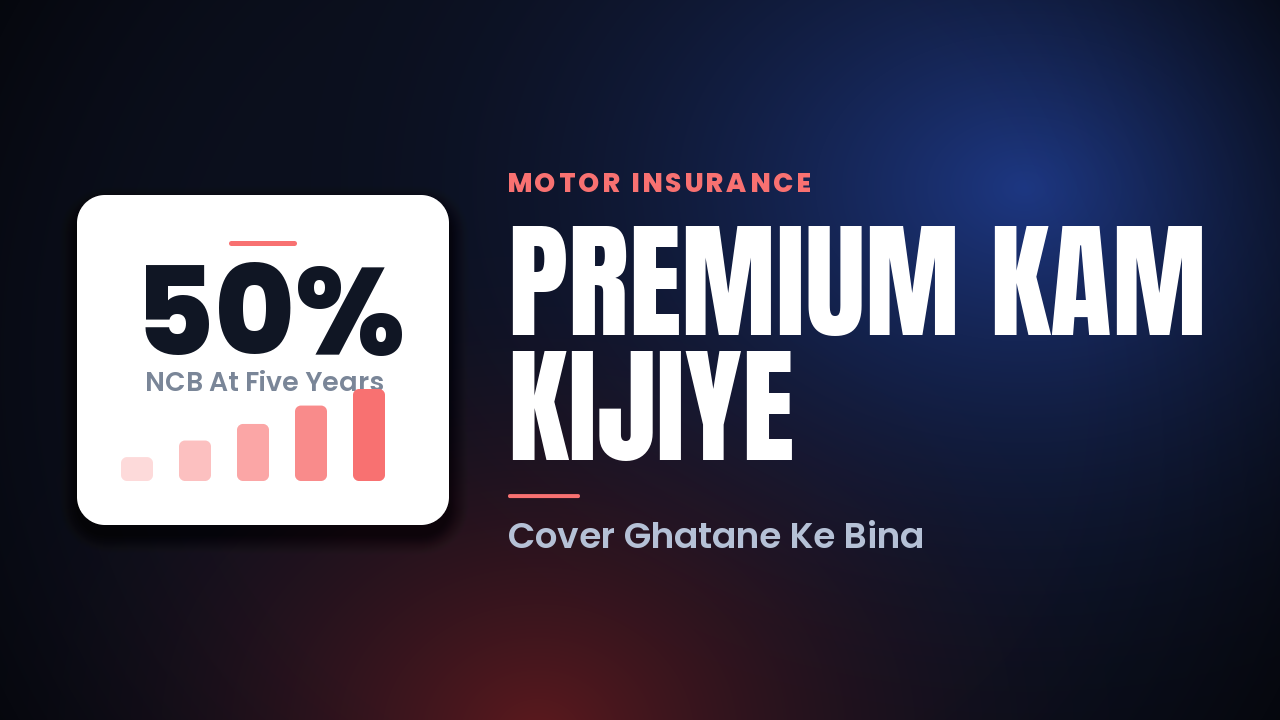
A claim-free year earns a discount on the own damage premium, and it increases with each consecutive claim-free year up to a substantial figure after five years — commonly described as rising towards fifty per cent.
Two consequences people underuse:
Do not claim for small damage. A scratched bumper costing eight thousand rupees to repair, claimed, resets the bonus to zero and costs you the accumulated discount on every renewal until you rebuild it. Work out the discount in rupees on your own renewal and compare it with the repair cost before raising a claim. For minor cosmetic damage the arithmetic almost always says pay it yourself.
Also remember the compulsory deductible, which you bear on every claim anyway, so a small claim recovers less than it appears to.
The bonus belongs to you, not the vehicle. When you sell a car and buy another, the accumulated bonus can be transferred to the new vehicle’s policy — you obtain a bonus retention letter from the existing insurer and apply it to the new policy. People routinely lose years of accumulated discount by not asking, and dealers arranging the new insurance rarely raise it.
And it lapses if the policy lapses. A gap in cover beyond a short grace period wipes out the accumulated bonus entirely, along with exposing you to driving uninsured. Renew before expiry, every year, with a reminder set a month ahead.
A bonus protection add-on exists with some insurers, allowing one or two claims without losing the discount. Worth pricing if your bonus is large and your roads are bad.
The other genuine savings
- Compare at renewal rather than auto-renewing. Own damage rating differs between insurers and the difference can be substantial. Get three quotes with identical sums insured and identical add-ons, which is the only comparison that means anything.
- Buy direct where you can. Buying online from the insurer removes the intermediary’s commission from the own damage component.
- Drop the add-ons you will never use. Keep the two or three that matter for your situation and decline the rest — many renewal quotes carry a bundle somebody selected once and nobody has reviewed since.
- Install an approved anti-theft device, which attracts a small discount with many insurers.
- Ask about a membership discount if you belong to a recognised automobile association, which several insurers recognise.
- Take a multi-year third party policy where it is available or required for a new vehicle, which locks that regulated component.
- Review the insured declared value as the vehicle ages. It should fall with age — this is not a cut in cover, it is the correct figure, and an insurer carrying an inflated value is charging you own damage premium on a value it will never pay.
- Insure two vehicles with the same insurer and ask what that is worth, which is sometimes a small discount and always a simpler claim relationship.
The savings that are really cuts

Each of these reduces the premium and reduces what you receive when you claim. They are choices rather than mistakes, provided you make them knowingly.
Declaring a lower insured value than the vehicle’s real worth. That figure is exactly what a total loss or theft claim pays. Shaving it to save a few hundred rupees of premium costs tens of thousands in the one scenario the cover exists for. Keep it realistic.
Taking a large voluntary deductible. It genuinely reduces the premium, and you bear that amount on every claim. Reasonable for someone who absorbs small damage anyway and would only ever claim for something serious; a poor choice for someone on a tight budget who would struggle to find the deductible at the moment of the claim.
Dropping zero depreciation on a newer vehicle. Without it, depreciation is deducted on replaced parts, and on a modern car with expensive plastic and electronic components that deduction is large. Worth keeping for the first several years.
Buying third party only on a vehicle of real value. Legal, cheap, and it provides no cover for your own vehicle at all — no accident damage, no theft, no fire. Reasonable for an old low-value vehicle you would not repair anyway; not for anything you would be upset to lose.
Skipping the legal liability cover for a paid driver. If you employ a driver, you owe them compensation for injury in the course of employment as a statutory matter. The add-on costs very little per person, and omitting it leaves that liability with you personally.
Skipping personal accident cover for the owner-driver and occupants, which is a small premium against a large exposure.
The add-ons worth keeping
- Zero depreciation, on a vehicle up to a few years old.
- Engine or consumables protection, in a flood-prone city, because water-damage repairs to an engine are both expensive and commonly excluded from the base cover.
- Roadside assistance, which is cheap and used.
- Return to invoice, on a new and particularly a financed vehicle, since a total loss otherwise settles at a depreciated value that may be below your loan.
- Legal liability to a paid driver, if you employ one.
- No claim bonus protection, if your accumulated bonus is large.
Most of the rest — key replacement, tyre cover, daily allowance — are convenience items. Price them individually and keep only what you would actually use.
A renewal routine
- Set a reminder a month before expiry. This single habit protects the bonus and avoids driving uninsured.
- Check the insured declared value is realistic for the vehicle’s current age.
- Get three quotes with the same insured value and the same add-ons, and compare the own damage component.
- Review the add-on list and remove what you have never used.
- Confirm the bonus carried forward correctly, and chase it if it has not.
- Decline bundled products you did not ask for.
- Check the claim record of the insurer you are moving to, not merely its price. A cheap insurer with a poor settlement record is not a saving.
- Keep the policy and the previous year’s in your claim file.
When selling or buying a used vehicle
- Selling: obtain the no claim bonus retention letter before transferring the policy, so the discount comes with you to the next vehicle.
- Buying used: the policy must be transferred into your name within the prescribed period after the ownership transfer. An untransferred policy is a serious problem at claim time, and buyers forget it constantly.
- Note that the seller’s bonus does not transfer to you — you start fresh, and the premium reflects that.
- Check for open claims on the vehicle before buying.
Frequently asked questions
Which part of the premium can actually be reduced?
The own damage and add-on components. Third party premium is regulated and identical across insurers, so comparing totals is misleading — compare the own damage figure with the same insured value and the same add-ons.
Should I claim for a small dent?
Usually not. A claim resets your no claim bonus, costing you the accumulated discount on every renewal until it rebuilds, and you bear the compulsory deductible anyway. Work out the discount in rupees and compare it with the repair cost.
What happens to my bonus when I sell the car?
It belongs to you rather than the vehicle, so obtain a retention letter from your insurer before transferring the policy and apply it to your next vehicle. People lose years of discount by not asking, and dealers rarely mention it.
Is reducing the insured value a good way to save?
No. That figure is exactly what a theft or total loss claim pays, so shaving it saves a little premium and costs a great deal in the one scenario the policy exists for.
Which add-ons are worth keeping?
Zero depreciation on a newer vehicle, engine protection in a flood-prone city, roadside assistance, return to invoice on a new or financed car, legal liability cover if you employ a driver, and bonus protection if your discount is large.
What must a used car buyer not forget?
Transferring the policy into their own name within the prescribed period after the ownership transfer. An untransferred policy causes serious problems at claim time, and the seller’s bonus does not come with the car.
In short
Only the own damage and add-on parts of the premium are negotiable, since third party rates are regulated and identical — so compare those components across three quotes with the same insured value and the same add-ons rather than comparing totals.
Then use the lever most people waste: the no claim bonus. Do not claim for small cosmetic damage, because resetting a discount that has built towards half the own damage premium costs far more than a bumper. Transfer the bonus when you change vehicles by obtaining a retention letter, and never let the policy lapse, which wipes it out entirely. Consider bonus protection if the accumulated discount is large.
Beyond that, buy direct, drop the add-ons you have never used, claim any device or membership discount, and let the insured value fall correctly as the vehicle ages. But do not confuse cuts with savings: shrinking the insured value, taking a large voluntary deductible, dropping zero depreciation on a new car, going third-party-only on a valuable vehicle, or skipping the liability cover for a paid driver all reduce the premium by moving the cost to the day you claim.
यह भी पढ़िए: Car Insurance Add-Ons: Which Ones Are Worth Paying For · No Claim Bonus: Why a Small Claim Can Cost More Than It Pays · IDV in Car Insurance: The Number That Decides Your Claim






